Peachy Bee Antiques
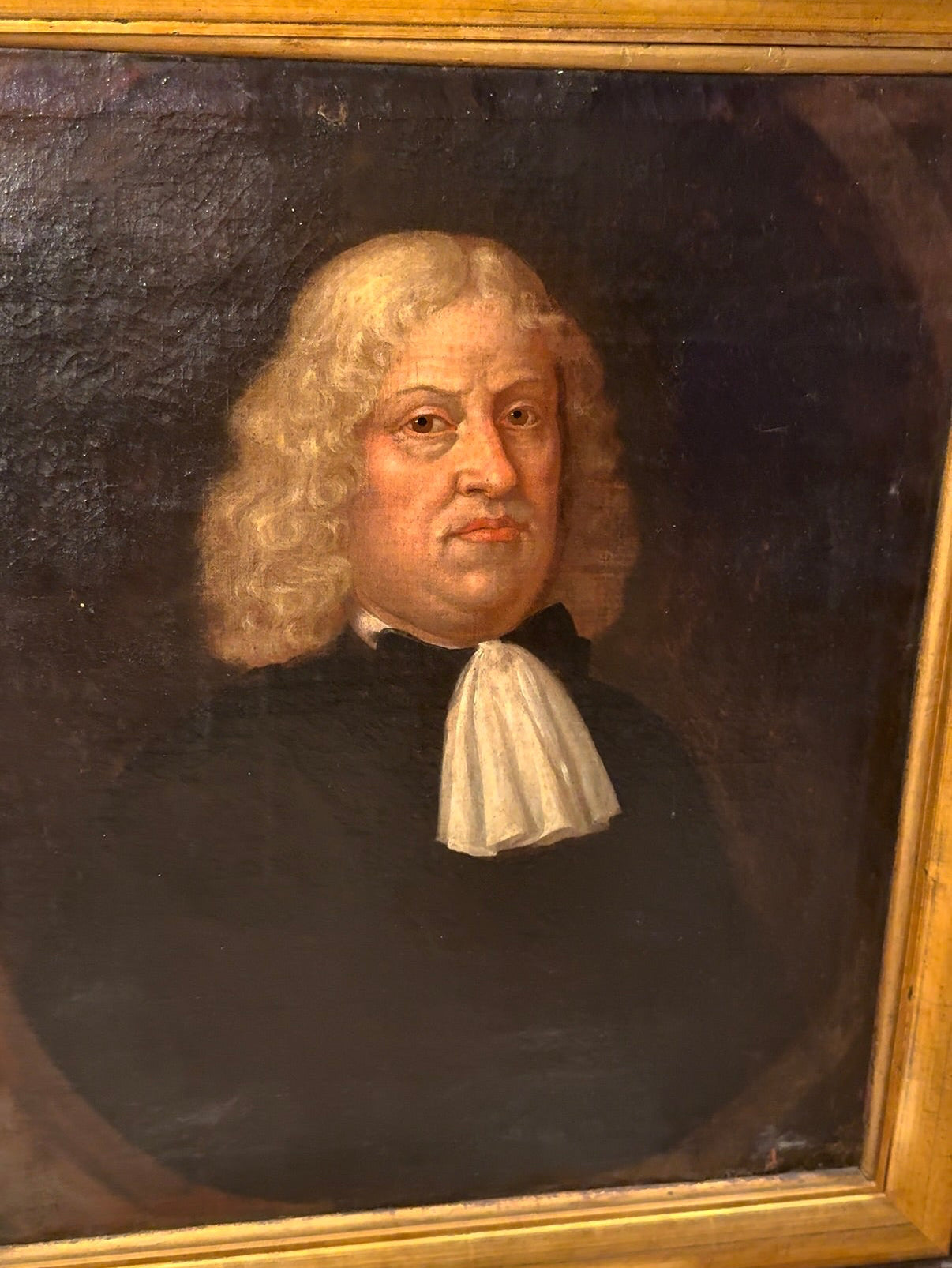
17th Century Dutch Oil Painting of Dignitary with Provenance
17th Century Dutch Oil Painting of Dignitary with Provenance
Couldn't load pickup availability
17th Century Northern European Oil Portrait
Adam Daniel Aspach, Le Medicus (1629–1689)
This rare 17th-century oil portrait depicts Adam Daniel Aspach, a documented Northern European medical professional active during the mid-to-late 1600s. The painting is particularly notable for its surviving provenance, which is inscribed directly on the back of the canvas and reads:
“Adam Daniel Aspach, Le Medicus, 1629–1689.”
This inscription provided the key to identifying the sitter and tracing his historical record.
Adam Daniel Aspach was born in 1629 in Bacharach on the Rhine, in present-day Germany. Following the devastation of the Thirty Years’ War, he emigrated north to Denmark, where he established himself in Copenhagen as a barber-surgeon and wound doctor. In the 17th century, barber-surgeons were highly trained medical practitioners responsible for surgical procedures, wound treatment, and general medical care. The inscription “Le Medicus” confirms Aspach’s professional status as a practicing physician.
In 1655, Aspach married Cathrine Mortensdatter von Møinichen, a woman from a prominent and well-documented family. Together they had several children, including Margretha Elisabeth, Sofie, Johann, Morten, Adam Daniel (named after his father), and Sixtus Adamssøn Aspach, who later became a bishop. The Aspach family went on to produce notable figures in medicine, theology, and the church across Denmark and Sweden, establishing a multi-generational educated lineage. The repeated use of the names Adam, Daniel, and Aspach across generations reflects common naming traditions of the period.
Later records suggest that Adam Daniel Aspach may have relocated to Sweden, where trained surgeons were in high demand in both urban and military contexts. He is believed to have died in or around 1689, at approximately 60 years of age.
Stylistically, the portrait aligns with Northern European professional portraiture of the mid-to-late 17th century, with clothing, pose, and format consistent with depictions of educated professionals of the era. The survival of both the painting and its legible provenance makes this work an exceptional example of documented early modern portraiture.
This piece stands as a compelling artifact of 17th-century medical, social, and cultural history, offering collectors a rare opportunity to acquire a portrait with a traceable sitter and inscribed provenance.